 Sleep Tiles
What is sleepmaxxing?
Sleepmaxxing is the internet's name for trying to get the most out of your sleep. Some of it is sensible and some of it is a fad. Here's what the term means, the parts worth keeping, and how to tell whether any of it is working for you.
Where the word comes from
"-maxxing" is internet slang for pushing one part of your life as far as it will go. Sleepmaxxing applies it to sleep. The term was a viral TikTok trend by early 2025, usually as videos of elaborate bedtime routines and the gadgets and drinks that go with them.
The idea is to work on sleep the way you'd work on fitness.
What people mean by it
Routines vary a lot, but most mix a few of these:
- Going to bed and getting up at the same time every day, weekends included
- A dark, cool, quiet bedroom: blackout curtains, a fan, earplugs
- No coffee after about 2 PM, and less alcohol in the evening
- Phones out of bed, or out of the bedroom
- Supplements, mouth taping and bedtime drinks
The first four are ordinary sleep habits you'll find in most advice about sleeping better. The last group is where the trend gets into things to ask a doctor or pharmacist about, rather than copy from a video.
The parts worth keeping
The parts with good evidence behind them are simple:
- Enough hours. For adults, the American Academy of Sleep Medicine recommends 7 or more a night.
- A regular schedule, with the same bedtime and wake time every day, weekends included.
- Fewer of the evening habits that cut into your own nights.
That last one is personal. Some people are more sensitive to caffeine than others. The only way to find out what affects you is to keep track.
How to tell if it's working
Changing six things at once and hoping to feel better doesn't tell you much. A slower approach does:
- Wear a tracker that saves sleep to Apple Health: an Apple Watch, Oura Ring, WHOOP, Garmin or a sleep app.
- Each evening, note what you did: coffee after 2 PM, a drink, a late meal, a workout, screens in bed.
- After a few weeks, compare nights with each habit against nights without it.
- Change the one that costs you most, and keep tracking to see if the nights improve.
Give each change at least a few weeks before you judge it.
In Sleep Tiles
Keep score of your sleepmaxxing
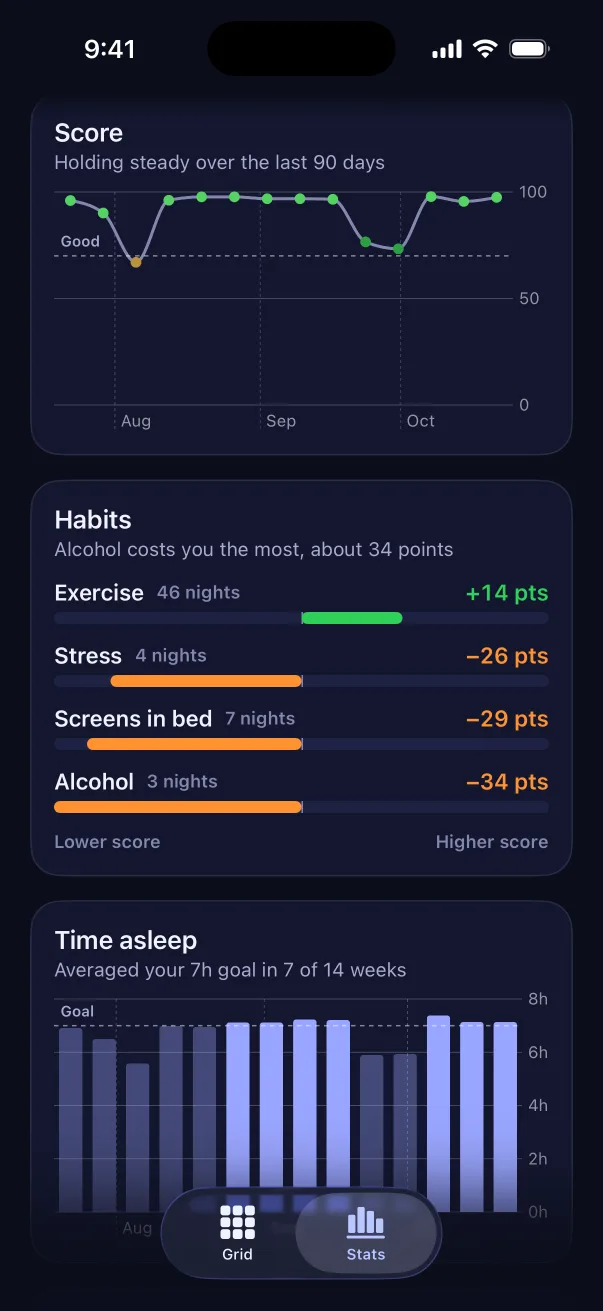
Sleep Tiles reads your nights from Apple Health and scores each one out of 100. It doesn't record sleep itself. Tag your evening with a tap, and once a tag has at least 3 nights with it and 3 without, Sleep Tiles shows how many points it gains or costs you on average.
- Preset tags such as late caffeine, alcohol, a late meal, screens in bed, stress and exercise, plus your own
- A streak of good nights to keep the new routine going
- Stats for 7, 30 and 90 days, a year or everything, each card with a plain sentence about what it shows
Don't overdo it
There's a name for worrying about sleep so much that it keeps you up, often fed by tracker data: orthosomnia. If checking your score has started to keep you awake, put the tracker away for a week, and talk to a doctor if the worry sticks around.
For the details behind the number, read how a sleep score is calculated, and for keeping a new routine going, track your sleep like a habit.
